

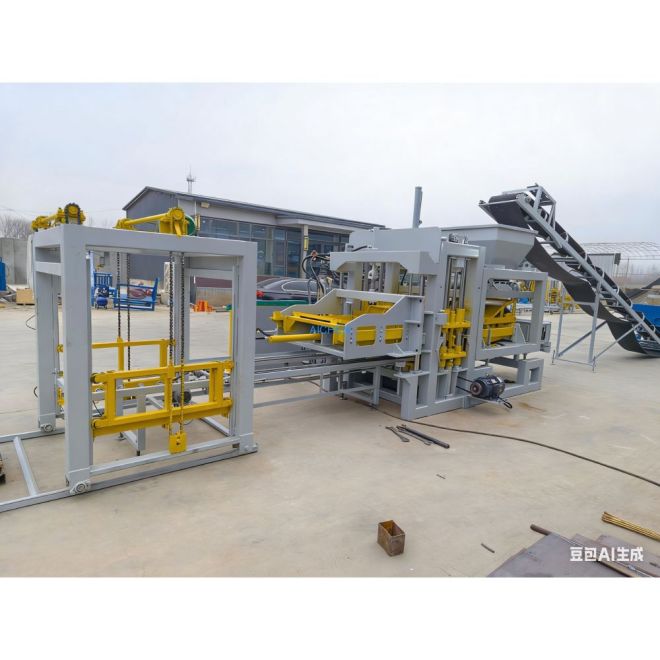
Your old brick line moves slower than your Monday mornings, workers keep “fixing” jams with hammers, and every order for high‑strength blocks turns into a guessing game instead of a repeatable, data‑driven process.
Upgrade to QT block making technology, automate molding and curing, and use digital control to hit the same strength every time—backed by standards in the ISO 22959 concrete products report.
• 🧱 Core Working Principles of QT Block Making Machines
QT block making machines mix cement, sand, and stone, then form compact blocks through vibration and pressure. Stable forming systems ensure high density and accurate block size.
By adjusting molds, vibration force, and cycle time, users can produce different hollow, solid, and paving blocks to match local construction standards and project needs.
1. Mixing and Material Proportioning
Accurate material ratios decide block strength. The mixer blends cement, sand, stone, and water to a uniform, workable consistency before feeding into the block machine hopper.
- Typical mix: 1 part cement, 3–6 parts aggregates
- Moisture control prevents cracking and deformation
- Stable mix reduces cement waste and improves quality
2. Vibration and Compaction Mechanism
High-frequency vibration removes air from the mix while upper pressure heads compact the material. This combination builds strong, durable blocks with smooth surfaces.
- Adjustable vibration frequency and amplitude
- Uniform compaction across mold cavities
- Less porosity, higher load-bearing capacity
3. Molding, Demolding, and Product Transfer
The machine fills the mold, vibrates, presses, and then demolds blocks onto pallets. A stable transfer system avoids cracks during early handling.
| Stage | Main Goal |
|---|---|
| Filling | Even material distribution |
| Vibration/Press | High density and strength |
| Demolding | Shape stability |
4. Automation, Control, and Product Flexibility
Modern QT systems use PLC control, touch screens, and sensors to manage cycles. You can quickly change molds for various blocks and production plans.
- Recipe storage for different block types
- Automatic fault alarms and protection
- Easy switch between hollow, paving, and curb blocks
• ⚙️ Structural Design and Key Components of QT Equipment
QT block machines use a rigid frame, vibration table, hydraulic system, and precise molds. This design supports continuous work, stable pressure, and long machine life.
Each component works together to reduce downtime, improve block quality, and simplify operation for small and medium-sized concrete block plants.
1. Machine Frame and Vibration Table
The welded steel frame holds all parts in alignment. A balanced vibration table transfers force evenly to each block cavity, minimizing wear and structural stress.
- High-strength steel main frame
- Shock-absorbing pads under vibration table
- Anti-fatigue design for long service time
2. Hydraulic System and Power Unit
The hydraulic station drives the pressing head and lifting parts. Stable oil pressure ensures reliable compaction and consistent block height in every cycle.
| Item | Function |
|---|---|
| Pump | Supplies system pressure |
| Valves | Control oil flow and motion |
| Oil Tank | Cools and stores hydraulic oil |
3. Molds, Pallets, and Wear Parts
Heat-treated molds define block shape and size. Quality pallets support blocks during demolding and curing, while wear parts protect critical contact surfaces.
- Replaceable liners extend mold life
- Standard pallet sizes ease logistics
- Quick-change design reduces downtime
4. Control System, Sensors, and Data Monitoring
The PLC panel controls each motion step. Sensors read positions and faults, while data records help improve productivity and reduce costs over time.
• 📊 Production Efficiency, Energy Consumption, and Cost Control Strategies
QT block plants improve profit by raising output per hour, cutting power use, and lowering cement costs without losing strength and quality.
Smart layout, good raw materials, and regular machine checks help reach stable, low-cost, high-quality production.
1. Optimizing Production Flow and Cycle Time
Plan raw material feeding, mixing, and pallet movement to avoid waiting time. Short, stable cycles keep machines running at their rated capacity.
- Balance mixer and block machine capacity
- Use enough pallets and curing space
- Train operators for quick mold changes
2. Reducing Power and Cement Consumption
Use proper aggregates and admixtures to lower cement usage. High-efficiency motors and correct vibration settings reduce electricity demand.
| Measure | Impact |
|---|---|
| Optimize mix design | Less cement cost |
| Energy-saving motors | Lower kWh per block |
| Scheduled maintenance | Prevents overload |
3. Choosing the Right QT Model and Supplier
Select machines based on block sizes, plant scale, and local demand. Reliable manufacturers give better molds, service, and long-term running cost.
- QT4-25B best block making machine concrete block making machine manufacturer
- qtj4 26c block making machine concrete block maker manual
- QT4-25B machine to make cement blocks hollow block making machine price
• 🌱 Green Manufacturing and Quality Standards for QT Concrete Blocks
Modern QT machines support low-carbon block plants by saving cement, recycling materials, and meeting national and international building standards.
Stable process control ensures that every block meets strength, size, and durability requirements for long service life in real projects.
1. Use of Industrial Waste and Recycled Materials
Fly ash, slag, and crushed recycled concrete can replace part of natural sand and stone, cutting cost and reducing environmental impact.
- Less need for natural aggregates
- Lower CO₂ per block
- Better use of local waste streams
2. Compliance with Strength and Dimensional Standards
QT blocks can reach required compressive strength levels and size tolerances when mix design, vibration time, and curing conditions are well controlled.
| Property | Typical Requirement |
|---|---|
| Compressive strength | ≥ 7.5–15 MPa |
| Length tolerance | ±2 mm |
| Water absorption | Within code limits |
3. Curing Methods and Long-Term Durability
Proper curing keeps moisture and temperature in a safe range, preventing early cracks and raising long-term durability under load and weather.
- Keep blocks covered and moist early
- Avoid rapid drying in strong sun
- Follow minimum curing days before delivery
• 🔧 Operation, Maintenance, and Technical Upgrading of QT Block Machines
Safe operation, scheduled maintenance, and timely upgrades help QT block plants keep high uptime, better block quality, and lower total life-cycle cost.
Simple tools, clear records, and trained staff are essential to prevent failures and plan future expansions or automation upgrades.
1. Daily Operation and Safety Management
Operators should follow standard procedures for startup, shutdown, and mold change, while respecting all safety guards and electrical protection devices.
- Keep work area clean and dry
- Check emergency stop buttons daily
- Do not enter moving areas without lockout
2. Preventive Maintenance and Spare Parts
Routine checks on hydraulic oil, bolts, and bearings prevent sudden breakdowns. Keeping key spare parts in stock shortens repair time.
| Task | Interval |
|---|---|
| Lubricate moving parts | Daily/weekly |
| Inspect hydraulic oil | Monthly |
| Check mold wear | Per batch or weekly |
3. Digital Upgrades and Process Improvement
Adding sensors, remote monitoring, and better control software helps track energy use, reject rate, and cycle times for continuous process improvement.
- Use data to adjust vibration and pressure
- Compare shifts and batches for quality
- Plan upgrades based on real plant data
Conclusion
QT block making machines combine strong structure, flexible molds, and smart controls to support efficient concrete block production. When plants manage mix design, curing, and maintenance carefully, they can produce high-quality blocks at low cost.
By using recycled materials, energy-saving components, and digital tools, QT technology helps block factories reach both economic and environmental targets in modern construction markets.
Frequently Asked Questions about qt block making machine
1. What materials can a QT block making machine use?
A QT machine typically uses cement, sand, stone, fly ash, slag, and water. With the right mix design, it can also work with some recycled aggregates.
2. How many blocks can a QT machine produce per day?
Output depends on model and block size. A mid-size QT4-25B line can often reach 4,000–6,000 standard hollow blocks in an 8-hour shift.
3. How long does it take for QT concrete blocks to cure?
Initial curing usually needs at least 24 hours before careful stacking. For full strength, most plants follow 21–28 days of controlled curing.
4. What factors most affect block quality?
Key factors include raw material quality, water-cement ratio, vibration and pressure settings, mold condition, and curing temperature and humidity.
5. How should I choose a suitable QT block making machine?
Consider your target block types, expected daily output, local power and labor costs, available raw materials, and the supplier’s after-sales service capability.


