

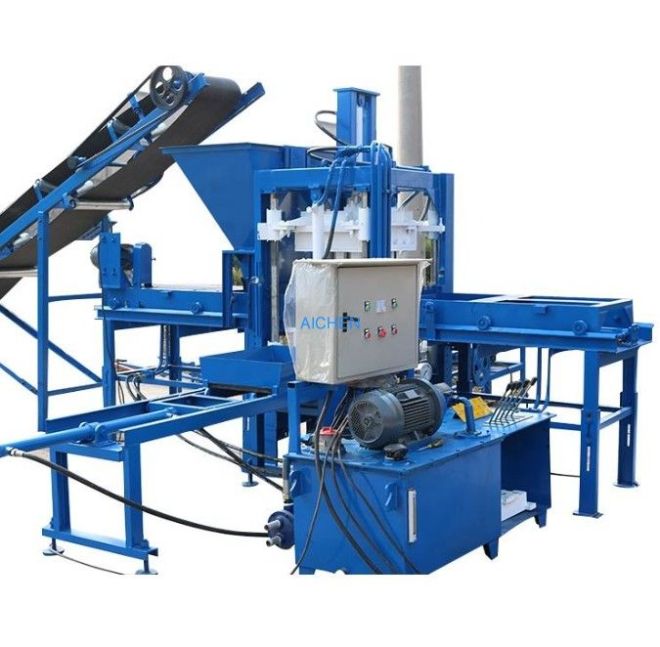
Tired of babysitting cranky old block machines that jam, leak oil, and eat up your weekends faster than wet cement? Relax—there’s a cleaner, faster, less “why is this smoking?” way to make perfect blocks.
Hydraulic semi automatic block machines fix the chaos with steady pressure, smooth cycles, and fewer breakdowns—boosting output while cutting labor and waste. Studies on automated concrete production back this up; see this industry report for performance and efficiency data.
🧱 Overview of Hydraulic Semi Automatic Block Machines and Working Principles
Hydraulic semi automatic block machines combine hydraulic pressure and simple control systems to produce dense, uniform concrete blocks with low labor costs and stable performance.
They suit both new and growing block plants and match well with models like the Semi Automatic Block Machine QT4-25 B for reliable daily production.
1. Basic Working Cycle
The machine feeds material, fills the mold, applies hydraulic pressure, vibrates, then ejects finished blocks in a repeatable, semi automatic cycle.
- Feed: concrete mix enters hopper
- Fill: material drops into mold box
- Press: hydraulic cylinder compacts mix
- Vibrate: removes air, increases density
- Demold: blocks exit onto pallet
2. Hydraulic vs Manual Compaction
Hydraulic force gives higher density and strength than pure manual compaction, while keeping investment lower than fully automatic block lines.
| Feature | Hydraulic Semi Automatic | Manual Machine |
|---|---|---|
| Block strength | High, uniform | Medium, varies |
| Labor need | Moderate | High |
| Output | Medium–high | Low |
3. Suitable Materials and Block Types
These machines handle concrete, sand, stone dust, and industrial waste to form hollow blocks, solid blocks, and pavers for many projects.
- Hollow blocks for walls
- Solid blocks for load areas
- Pavers for roads and yards
- Kerb stones and special shapes
4. Ideal Users and Applications
They fit small and medium factories, contractors, and investors who want flexible mold changes and stable production with limited skilled staff.
- Start-up block yards
- Regional construction suppliers
- Government and road projects
- Rural building programs
⚙️ Key Hydraulic Components and Their Roles in Block Production
The hydraulic system creates strong, stable pressure that compacts concrete mix, reduces voids, and ensures each block has similar size and strength.
Understanding each hydraulic part helps operators reduce failures, plan maintenance, and quickly solve quality problems during continuous production.
1. Hydraulic Pump and Motor
The pump and motor convert electrical power into oil flow and pressure, driving cylinders that press the mold head onto the fresh concrete mix.
- Choose correct pump size
- Keep oil clean and cool
- Check noise and vibration
- Monitor pressure gauge
2. Valves and Pressure Control
Directional and relief valves guide oil flow and set maximum pressure so the machine presses blocks safely without damaging molds or frames.
| Valve Type | Main Role |
|---|---|
| Directional valve | Changes oil flow direction |
| Relief valve | Limits maximum pressure |
| Flow control valve | Adjusts movement speed |
3. Cylinders and Moving Parts
Hydraulic cylinders move the press head and sometimes the pallets. Smooth, leak-free movement keeps pressing force stable and blocks accurate.
- Inspect seals for leaks
- Check rod for rust and damage
- Grease moving joints
- Keep stroke speed stable
4. Oil Tank, Filtration, and Temperature
The oil tank stores fluid, while filters and a cooler protect the hydraulic system from dirt and high temperature that cause early failure.
- Change oil on schedule
- Clean or replace filters
- Watch oil temperature
- Use recommended oil grade
📏 Setting Molds, Pressure, and Cycle Time for Consistent Block Quality
Correct mold setup, pressure setting, and cycle time keep block size, weight, and strength stable and reduce waste or customer complaints.
Operators should record best settings for each mix and block type to repeat good results every production shift.
1. Mold Installation and Alignment
Install molds firmly and check alignment between mold box and press head to avoid broken corners and uneven block heights.
- Use clean, rust-free molds
- Tighten all bolts evenly
- Check clearance on all sides
- Test with a small batch
2. Setting Hydraulic Pressure
Adjust pressure to match block size, mix, and strength needs. Too low gives weak blocks; too high damages molds and frames.
| Block Type | Typical Pressure Range |
|---|---|
| Hollow block | 12–18 MPa |
| Solid block | 16–22 MPa |
| Paver | 18–25 MPa |
3. Optimizing Vibration and Cycle Time
Balance vibration time and full cycle length to achieve dense blocks while protecting parts and keeping good hourly production rates.
- Use strong but short vibration
- Avoid over-vibration and cracking
- Record best cycle time
- Check block weight often
🔧 Daily Maintenance, Troubleshooting, and Safety Practices for Operators
Planned daily checks, simple troubleshooting steps, and clear safety rules keep hydraulic block machines reliable and protect workers on site.
Train operators to listen, look, and feel for changes in sounds, pressure, and block quality during every shift.
1. Daily and Weekly Maintenance Tasks
Regular small tasks avoid big failures. Focus on cleaning, lubrication, and hydraulic checks before starting heavy production runs.
- Clean machine and work area
- Check oil level and leaks
- Grease bearings and guides
- Tighten loose bolts
2. Common Problems and Quick Fixes
Low pressure, slow movement, or uneven blocks often come from air in oil, dirty filters, or wrong material moisture levels.
| Problem | Likely Cause | First Action |
|---|---|---|
| Weak blocks | Low pressure / wet mix | Raise pressure, adjust mix |
| Slow press | Clogged filter | Clean or change filter |
| Oil leaks | Worn seals | Replace seals, tighten joints |
3. Safety Rules for Operators
Clear safety habits reduce accidents. Never bypass guards or work near moving parts when the hydraulic system is under pressure.
- Wear helmet, gloves, and shoes
- Keep hands off mold area
- Lockout before repairs
- Train new staff properly
🏭 How Aichen Machines Improve Productivity and Reduce Production Costs
Aichen hydraulic semi automatic machines increase block output, cut labor per block, and reduce cement use by giving better compaction and fewer rejects.
Models like the QT4-24 cheap concrete block making machine paving making machine for sale offer durable frames and flexible mold options.
1. Higher Output with Stable Quality
Efficient vibration and press systems shorten each cycle and keep block height and density uniform across long shifts and changing weather.
- Fast cycle times
- Less rework and breakage
- Strong steel structure
- Consistent finished blocks
2. Lower Labor and Material Costs
One trained operator can manage feeding, pressing, and stacking, while precise compaction lets you reduce cement content in the concrete mix.
| Cost Item | Manual Line | Semi Automatic Line |
|---|---|---|
| Workers per shift | 6–8 | 2–3 |
| Cement per block | Base | 5–10% lower |
3. Flexible Models for Different Budgets
Aichen offers options from manual assisted units like the qtj4 26c block making machine concrete block maker manual to higher output hydraulic systems.
- Entry models for new plants
- Upgradable lines for growth
- Wide mold choices
- Support and spare parts
Conclusion
Hydraulic semi automatic block machines give a strong balance of cost, output, and quality for growing block plants and contractors.
By understanding hydraulic parts, setting molds and pressure correctly, and following daily care and safety rules, you can achieve strong, uniform blocks and lower production costs.
Frequently Asked Questions about hydraulic semi automatic block machine
1. What is a hydraulic semi automatic block machine?
It is a concrete block machine that uses hydraulic pressure for compaction and simple controls for feeding and pressing, while still needing operators for some steps.
2. How many workers are needed to run the machine?
Most setups need 2–3 workers per shift: one for material feeding, one for operating and monitoring, and one for pallet handling and stacking.
3. What materials can I use in these machines?
You can use cement, sand, stone chips, fly ash, slag, and other local aggregates, as long as you keep a consistent mix and moisture level.
4. How often should I change hydraulic oil?
Check the maker’s manual, but many plants change oil every 6–12 months or after a set number of hours, and replace filters at the same time.
5. Can I make different block sizes with one machine?
Yes. You can change molds to produce different hollow blocks, solid blocks, and pavers, as long as the mold fits the machine’s frame and stroke.


