

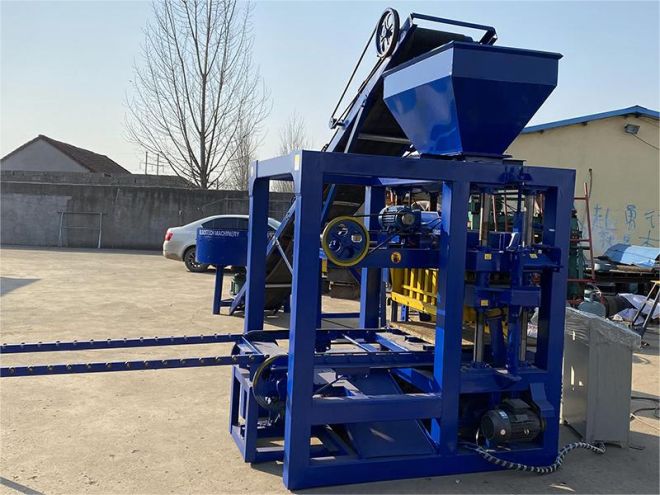
Tired of babysitting a fussy block machine that jams, misfeeds, and eats your time like free snacks? The Ultimate Guide to QT Series Semi Automatic Block Machine turns daily production drama into smooth, repeatable block-making.
By choosing the right QT semi automatic model, tuning mix ratios, and following proven maintenance routines, you boost output and cut downtime—exactly what global studies on automated concrete production recommend (Journal of Cleaner Production).
1. 🧱 Overview of QT Series Semi Automatic Block Machine Working Principles
QT series semi automatic block machines turn cement, sand, and gravel into strong blocks using vibration, molding pressure, and accurate feeding for stable output.
Operators control material feeding and pallet movement, while the machine handles vibration and pressing to keep block size and strength uniform on every cycle.
1.1 Material Feeding and Mixing
The machine uses a hopper to feed mixed materials into the mold evenly. Stable feeding helps achieve dense blocks with consistent strength.
- Use well-graded sand, cement, and aggregates
- Keep moisture level stable for each batch
- Clean the hopper to avoid clogging
1.2 Vibration and Compaction Process
Strong vibration shakes material into every corner of the mold, removing air gaps and improving block density and durability.
- Adjust vibration time to block type
- Use higher vibration for hollow blocks
- Check loose bolts on vibration table
1.3 Semi Automatic Control and Pallet Movement
The operator starts each cycle, while the system controls pressing sequence and pallet movement, giving good efficiency with low labor cost.
| Step | Action |
|---|---|
| 1 | Place pallet |
| 2 | Start cycle |
| 3 | Vibrate and press |
| 4 | Demold and stack |
1.4 Typical Models in the QT Series
Popular models like the QT4-26 Semi-automatic Block Machine offer reliable output for small and medium projects.
- Suitable for hollow, solid, and paver blocks
- Balanced price and performance
- Easy to learn for new operators
2. ⚙️ Key Components and Technical Specifications Builders Must Understand
Understanding the main parts of QT series machines helps you choose the right capacity, plan your layout, and manage daily production more efficiently.
Focus on vibration system, hydraulic unit, molds, and electrical control to match machine performance with your target block sizes and volumes.
2.1 Vibration Table and Motor Power
Motor power and vibration frequency directly affect compaction, block strength, and cycle time, especially when you change material ratios or block shapes.
| Model | Vibration Power (kW) | Blocks/Cycle* |
|---|---|---|
| QT4-26 | 3–4 | 4–6 |
| QT4-25B | 4–5.5 | 4–8 |
*Typical 400×200×200 mm hollow blocks.
2.2 Hydraulic or Mechanical Pressing System
Some QT series machines use hydraulic cylinders for smoother pressing, while simpler models use mechanical force with lower cost but less flexibility.
- Hydraulic: better density control
- Mechanical: easy maintenance
- Choose based on budget and output
2.3 Mold Sets, Sizes, and Changeover Time
Molds decide finished block size and shape. Fast mold change helps you serve different jobs without long stoppages or complex adjustments.
- Keep molds clean and oiled
- Check wear on corners and edges
- Store spare molds in dry area
2.4 Output Capacity Comparison (with ECharts Bar Chart)
Different QT models, such as the QTJ4-26 qt4 24 block making machine price small block making machine and QT4-25B QTJ4-25B small cement block making machine simple block making machine, offer varying daily outputs.
*Approximate hollow block capacity with 8-hour shift.
3. 📏 Operating Procedures and Setup Tips for Stable, Accurate Block Production
Good setup and daily checks reduce waste, keep block dimensions accurate, and lower the risk of machine breakdown during busy production days.
Follow clear steps for feeding, vibration tuning, and curing to maintain predictable quality across every production shift.
3.1 Site Preparation and Machine Leveling
Install the machine on a firm, level base to prevent vibration loss and block size variation across molds and cycles.
- Use a level gauge during installation
- Anchor the frame to concrete
- Leave space for pallets and curing
3.2 Correct Feeding Ratios and Moisture Control
Keep the mix slightly damp, not wet. Stable water ratio is key for smooth demolding and high compressive strength.
| Material | Typical Range |
|---|---|
| Cement | 8–12% |
| Sand/Aggregate | 88–92% |
3.3 Curing, Handling, and Storage of Finished Blocks
Handle fresh blocks gently, then cure under shade or with light spraying to avoid cracks and strength loss.
- Start curing 6–8 hours after molding
- Keep blocks moist for 7 days
- Stack with gaps for airflow
4. 🧪 Maintenance, Troubleshooting, and Safety Practices for Long-Term Reliability
Routine maintenance and clear safety rules extend machine life, reduce downtime, and protect workers in demanding production environments.
Plan daily, weekly, and monthly tasks so small issues do not grow into costly mechanical failures.
4.1 Daily and Weekly Maintenance Checklist
Regular checks keep vibration, hydraulic parts, and electrical systems in safe working condition with minimal unscheduled stops.
- Lubricate moving parts daily
- Inspect belts and hoses weekly
- Tighten loose bolts and nuts
4.2 Common Production Problems and Quick Fixes
Typical issues include cracked blocks, poor filling, or uneven heights. Quick checks often solve them without major repairs.
| Problem | Likely Cause | Action |
|---|---|---|
| Cracks | Too little water | Increase moisture slightly |
| Low strength | Low cement | Raise cement ratio |
| Uneven height | Machine not level | Re-level and tighten bolts |
4.3 Safety Rules for Operators and Helpers
Clear safety training reduces accidents near moving parts, vibration tables, and electrical cabinets.
- Never reach into mold area while running
- Use gloves, boots, and hearing protection
- Lock out power before repairs
5. 🏭 Why Aichen QT Series Machines Improve Productivity and Block Quality
Aichen QT series semi automatic machines combine reliable hardware with flexible molds to give builders strong blocks at a competitive production cost.
Balanced design, low energy use, and easy maintenance make them ideal for start-up yards and growing block factories.
5.1 Higher Output with Controlled Labor Costs
One or two operators can run a QT machine, allowing you to grow daily production without hiring a large team.
- Short cycles per batch
- Simple controls reduce training time
- Low power demand per block
5.2 Consistent Density and Dimensional Accuracy
Strong vibration, precise molds, and steady feeding deliver blocks with uniform size, which speeds up wall alignment and reduces mortar use.
- Less on-site cutting and trimming
- Better wall finish quality
- Fewer rejected blocks
5.3 Flexible for Different Projects and Local Materials
QT machines accept various mixes, including local sand and gravel, so you can adapt quickly to changing market needs.
- Hollow and solid blocks
- Paving and curb stones
- Fast mold change for new orders
Conclusion
QT series semi automatic block machines give builders a solid mix of reliability, flexibility, and cost control. With proper setup, maintenance, and safe work habits, they deliver strong, uniform blocks day after day.
By understanding working principles, key components, and correct operating steps, you can raise output, cut waste, and support steady growth of your block business.
Frequently Asked Questions about qt series semi automatic block machine
1. What materials can I use in a QT series semi automatic block machine?
You can use cement, sand, crushed stone, and sometimes fly ash or slag. Keep a stable mix and moisture level for best strength and smooth demolding.
2. How many workers do I need to run a QT machine?
Usually one operator and one helper are enough. The operator controls the panel, while the helper handles pallets, stacking, and material supply.
3. How long does it take for blocks to reach full strength?
Most concrete blocks reach good handling strength after one to two days, but they need about 28 days of curing to reach full design strength.
4. Do I need special training to operate the machine?
Basic training is recommended. Most QT machines use simple controls, so workers can learn safe operation and daily maintenance within a few days.
5. How often should I replace molds?
Mold life depends on steel quality, maintenance, and production volume. With good cleaning and lubrication, molds often last many tens of thousands of cycles.


