

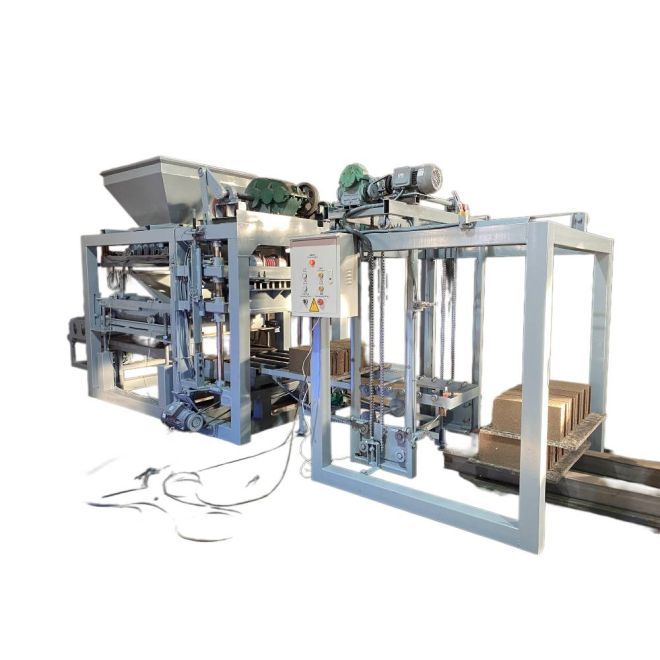
Introduction to Hollow Block Making
Hollow blocks have become a cornerstone in modern construction, appreciated for their durability, cost-effectiveness, and versatility. Understanding the process of making hollow blocks can provide valuable insight into their significance in the construction industry and the technology behind their production. This article delves into every aspect of the hollow block manufacturing process, from raw material preparation to the advanced machinery used in their creation.
Raw Materials Used in Hollow Blocks
● Cement, Sand, Gravel, and Water
The basic constituent materials for making hollow blocks are cement, sand, gravel, and water. Cement acts as the binding agent, while sand and gravel provide the necessary bulk and strength. Water initiates the chemical reactions needed for the hardening process.
● Additives for Strength and Durability
Various additives can be added to the mixture to enhance the properties of the hollow blocks. Common additives include fly ash, slag, and other pozzolanic materials that can improve the block's strength, reduce permeability, and increase its durability. The choice of additives often depends on the specific requirements of the project and the environmental conditions where the blocks will be used.
Preparation of Raw Materials
● Mixing Proportions
Accurate measurement and mixing of raw materials are crucial for producing high-quality hollow blocks. The typical mix ratio for making hollow blocks is 1 part cement, 3 parts sand, and 6 parts gravel, with water added to achieve the desired consistency. Proper mixing ensures that the blocks will have uniform strength and durability.
● Quality Control Measures
Quality control starts with the careful selection of raw materials. Sand and gravel should be free from impurities like clay or organic matter, which can weaken the blocks. Cement should be stored in a dry place to prevent it from absorbing moisture and clumping. Throughout the mixing process, samples are often tested to ensure that the mix meets specified standards.
Types of Hollow Block Machines
● Manual vs. Semi-Automatic vs. Fully Automatic
Hollow block machines come in various types, each offering different levels of automation. Manual machines are labor-intensive but cost-effective, making them suitable for small-scale production. Semi-automatic machines strike a balance between productivity and cost, whereas fully automatic machines offer the highest efficiency and consistency.
● Advantages of Fully Automatic Machines
Fully automatic hollow block machines offer several advantages, including higher production rates, improved consistency, and reduced labor costs. These machines are equipped with advanced features such as computerized control systems, automated feeding systems, and high-pressure molding, which ensure that each block meets stringent quality standards.
The Mixing Process
● Steps Involved in Creating the Concrete Mix
The mixing process begins with the precise measurement of raw materials, followed by their thorough mixing in a concrete mixer. The mixer must achieve a uniform blend to ensure that all particles are evenly coated with cement. Water is added gradually to achieve the desired consistency, and mixing continues until the mixture is homogeneous.
● Importance of Consistency in the Mix
Consistency is paramount in the mixing process. An inconsistent mix can lead to blocks with varying strengths, which can compromise the structural integrity of a building. The right mix ensures that the blocks will have uniform density, strength, and durability, which are critical for reliable construction.
Molding and Forming Hollow Blocks
● Molding Methods and Machinery
The mixed concrete is poured into molds or fed into a hollow block machine, which shapes the material into the desired block form. The mold's design and size can vary depending on the type of block being produced. Modern machines use high-pressure vibration to compact the concrete, ensuring that the blocks are dense and free from air pockets.
● Ensuring Uniformity and Quality
Uniformity in size and shape is crucial for the blocks to fit together seamlessly in construction. Quality control measures, such as regular inspections and sampling, are implemented throughout the molding process to ensure that each block meets the required specifications. Any blocks that do not meet these standards are discarded or recycled.
Curing and Drying Process
● Importance of Proper Curing
Proper curing is essential for achieving the full strength and durability of the hollow blocks. Curing involves maintaining the blocks in a moist environment for a specified period, allowing the cement to hydrate fully. This process typically lasts for 7 to 28 days, depending on the type of cement and environmental conditions.
● Methods Used for Drying Blocks
Various methods can be employed to cure and dry the blocks. The most common method is water curing, where the blocks are kept in water tanks or continuously sprayed with water. Steam curing is another method, which involves exposing the blocks to steam in a controlled environment, accelerating the curing process.
Quality Control and Testing
● Standards to be Met
Hollow blocks must meet specific standards and regulations to ensure their suitability for construction. These standards cover aspects such as compressive strength, density, and dimensional accuracy. Compliance with these standards is verified through rigorous testing and inspection processes.
● Testing for Strength and Durability
Several tests are conducted to assess the strength and durability of hollow blocks. Compressive strength tests involve applying pressure to the blocks until they break, measuring their ability to withstand loads. Other tests, such as water absorption and shrinkage tests, evaluate the blocks' resistance to environmental factors.
Benefits and Applications
● Advantages of Hollow Blocks in Construction
Hollow blocks offer numerous advantages over traditional building materials. They are lightweight, reducing the load on the foundation and making them easier to handle and transport. Their hollow design provides excellent thermal and sound insulation, enhancing the comfort and energy efficiency of buildings. Additionally, hollow blocks are more eco-friendly, as they require less raw material and energy to produce.
● Common Uses in Building Projects
Hollow blocks are widely used in various construction projects, from residential buildings to commercial and industrial structures. They are commonly used for walls, partitions, and retaining structures. Their versatility and adaptability make them ideal for a wide range of applications, including load-bearing and non-load-bearing walls.
Future Innovations and Trends
● Technological Advancements in Block-Making
The hollow block industry continues to evolve, with new technologies and innovations enhancing the efficiency and quality of block production. Advances in automation, robotics, and artificial intelligence are streamlining the manufacturing process, reducing labor costs, and increasing production rates.
● Sustainability and Environmental Impact
Sustainability is becoming increasingly important in the construction industry. Hollow block manufacturers are adopting eco-friendly practices, such as using recycled materials and reducing energy consumption. The development of new materials and technologies is also helping to minimize the environmental impact of block production.
Conclusion
The process of making hollow blocks is a complex and intricate procedure that requires precision and attention to detail at every stage. From the careful selection and mixing of raw materials to the advanced machinery used in molding and curing, each step is crucial in producing high-quality blocks that meet stringent standards. As technology continues to advance, the hollow block industry is poised for even greater innovations, enhancing efficiency, sustainability, and quality.
Changsha Aichen
Changsha Aichen is located in Changsha city, Hunan province of China. We are committed to the research and development, manufacture and sales of concrete block making machines since 1999. Aichen manufactures a wide selection of concrete-product machines and block production lines, including brick machines, block forming machines, automatic block production lines, and more. For over 20 years, Aichen has consistently adhered to the principle of servicing our clients with sincerity and integrity. We offer comprehensive customer service and are happy to help with your concrete machinery needs.


