

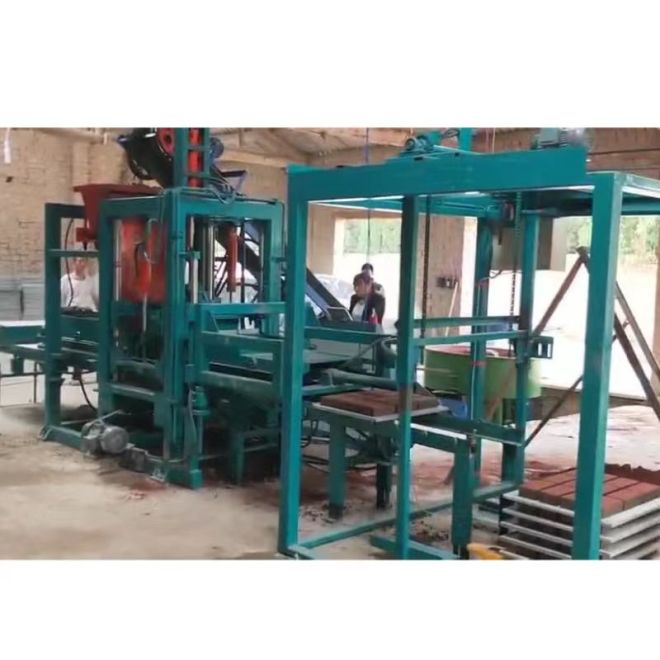
Your blocks look like a game of Tetris gone wrong, workers are guessing buttons, and the QT3-20 block machine seems more mysterious than your factory’s electricity bill.
Learn its working principle and key components, then standardize operation and maintenance (OSHA machine safety guide), so every block comes out right.
🔧 Basic working principle of the QT3-20 concrete block forming cycle
The QT3-20 block machine forms concrete blocks through feeding, vibration, compression, and demolding. Each step follows a fixed cycle to ensure stable size and strength.
The operator sets recipes, then the machine automatically completes mixing, filling, compacting, and lifting. This creates uniform hollow blocks and pavers with low labor cost.
1. Material feeding and mold filling
The feeder distributes concrete mix evenly into the mold. Proper feeding reduces voids and improves density before vibration and pressing start.
- Screw or belt transfers mix from mixer
- Feed box moves back and forth over mold
- Leveling blade spreads material evenly
- Sensors can control feed volume
2. Vibration to rearrange concrete mix
High-frequency vibration forces air out and lets aggregates settle tightly. This step prepares the mix for strong compression.
| Parameter | Typical Range | Effect on Block |
|---|---|---|
| Vibration frequency | 3800–4800 rpm | Controls surface finish |
| Vibration time | 5–12 s | Impacts density |
| Amplitude | 1–2 mm | Reduces internal voids |
3. Compression and forming
The press head moves down to compress concrete inside the mold. Vibration and pressing often run together to reach target strength faster.
- Hydraulic cylinders drive the press head
- Adjustable pressure for different block types
- Combined action with vibration table
- Forms final shape and dimensions
4. Demolding and green block transfer
After compression, the mold lifts while the press head holds blocks on the pallet. The machine then moves the fresh blocks to the curing area.
- Automatic pallet feeding and output
- Stable lifting avoids edge damage
- Blocks ready for curing racks
- Cycle repeats for continuous output
⚙️ Main mechanical components and their functions in QT3-20 block machine
The QT3-20 block machine integrates frame, hydraulic, vibration, and feeding systems. Each part works together to give consistent shaping and long-term stable production.
Good understanding of these components helps users compare with models like QTJ425 QT425 hydraulic concrete block making machine fully automatic paver block making machine and select suitable equipment.
1. Machine frame and mold system
The rigid frame holds all moving parts in line. Changeable steel molds decide block size, layout, and surface texture.
| Part | Function |
|---|---|
| Main frame | Supports vibration and pressing loads |
| Mold box | Forms hollow or solid cavity shape |
| Core inserts | Create holes in hollow blocks |
| Press head plate | Applies pressure from top |
2. Hydraulic station and cylinders
The hydraulic pump group powers cylinders for pressing and lifting. Stable oil pressure keeps each cycle accurate and protects mechanical parts.
- Hydraulic pump: provides flow and pressure
- Valves: control direction and speed
- Cylinders: drive press head and lifting beam
- Oil tank and filter: ensure clean, cool oil
3. Vibration table and motors
The vibration table mounts under the mold and uses motors with eccentric blocks. It compacts the mix quickly to achieve high density.
- Dual vibration motors for stronger impact
- Balanced design reduces frame stress
- Adjustable weights change vibration force
- Rubber pads isolate vibration from ground
4. Feeding, palletizing, and conveyor units
These units move materials and pallets through the system. They remove hand work and keep a smooth, repeatable cycle for each batch.
🏗️ Vibration and compression systems ensuring high-density, uniform concrete blocks
QT3-20 uses strong vibration together with hydraulic compression. This combination reduces air gaps and creates solid blocks with stable size and high strength.
By tuning vibration time and pressure, users can match requirements similar to higher capacity lines like QT3-20 hollow block plant concrete block plant for sale.
1. Frequency and amplitude tuning
Operators can adjust vibration frequency and amplitude for different raw materials. Proper settings improve compaction without over-stressing the machine.
- Higher moisture often needs longer vibration
- Hard aggregates may need stronger amplitude
- Fine sand requires careful frequency control
2. Synchronous vibration and pressing
QT3-20 often vibrates while the press head moves down. This dual action moves particles into tight contact and raises final strength.
| Mode | Use Case |
|---|---|
| Vibration only | Pre-compaction after filling |
| Vibration + pressing | Standard hollow and solid blocks |
| Pressing hold | Finish stage to lock density |
3. Effects on strength, density, and surface
Right vibration and pressure improve compressive strength, reduce water absorption, and give smooth block surfaces, which saves mortar during wall laying.
- Better interlock between cement and aggregate
- Lower cracking risk during curing
- More uniform color and texture
📊 QT3-20 control system operation, parameter adjustment, and production stability
The QT3-20 control system manages each step of the cycle. Clear buttons and timers help new operators quickly learn and keep output stable.
It also allows fine tuning of vibration time, pressing time, and delay intervals, similar to semi-automatic lines like Automatic Block Machine QT4-18.
1. Control panel layout and main functions
The panel usually includes start, stop, emergency stop, manual/auto switch, and timers. Indicator lights show machine status during the whole cycle.
- Cycle start and reset buttons
- Hydraulic pump on/off switch
- Vibration control and indicator
- Alarm light for faults
2. Key parameters to adjust
Users can change several settings to suit raw materials and block types. Correct tuning improves both quality and daily capacity.
| Parameter | Influence |
|---|---|
| Vibration time | Density and surface quality |
| Pressing time | Block strength and corner sharpness |
| Feed time | Fullness of mold cavity |
| Cycle delay | Coordination of all movements |
3. Ensuring stable, continuous production
Stable production needs both proper settings and regular checks. Operators should follow a simple checklist before each shift.
- Confirm oil level and pressure
- Test vibration and pressing in manual mode
- Check limit switches and sensors
- Record daily output and fault history
🛠️ Routine maintenance points and recommended spare parts from Aichen for QT3-20
Regular maintenance lowers downtime and extends the life of QT3-20 block machines. Simple daily tasks can prevent costly failures later.
Aichen suggests users stock key spare parts on-site to keep production lines running even when unexpected wear or damage appears.
1. Daily, weekly, and monthly maintenance tasks
Maintenance should follow a clear schedule. Basic cleaning and inspection reduce vibration problems, oil leaks, and alignment issues.
| Interval | Main Tasks |
|---|---|
| Daily | Clean machine, check bolts and hoses |
| Weekly | Grease bearings, check vibration motors |
| Monthly | Inspect molds, check oil filter and seals |
2. Wear parts and recommended stock
Some parts wear faster due to friction and impact. Keeping spares avoids long stops while waiting for shipments.
- Vibration motor bearings and rubber pads
- Hydraulic seals and hoses
- Mold liners, cores, and press head plates
- Limit switches and control buttons
3. Aichen technical support and upgrades
Aichen can help users upgrade molds, adjust settings, and train workers. This support keeps QT3-20 machines efficient for many years.
- Online fault diagnosis and advice
- Custom mold design for local markets
- Training on new materials and mixes
- Upgrade kits for hydraulics and controls
Conclusion
The QT3-20 block machine combines controlled feeding, strong vibration, and stable hydraulic pressing to produce high-quality concrete blocks. Its structured cycle supports consistent size and strength.
By understanding main components, control settings, and maintenance needs, users can run QT3-20 lines efficiently, reduce downtime, and meet local building standards with reliable output.
Frequently Asked Questions about QT3-20 Block machine
1. What raw materials can QT3-20 use?
QT3-20 can use cement, sand, crushed stone, fly ash, and some industrial waste. The key is to keep a stable mix ratio and moisture content.
2. How many workers are needed to operate QT3-20?
Usually 3–4 workers are enough: one at the mixer, one at the machine, and one or two handling pallets and curing area operations.
3. How often should I change the hydraulic oil?
Most users change oil every 6–12 months, depending on working hours and environment. Always follow the supplier’s guideline and keep filters clean.
4. Can QT3-20 make different block sizes?
Yes. You can change the mold set to produce hollow blocks, solid blocks, and pavers. The machine frame stays the same while molds vary.
5. What is the typical service life of a QT3-20 block machine?
With proper maintenance and correct operation, a QT3-20 machine can work reliably for more than 8–10 years in normal production conditions.


