

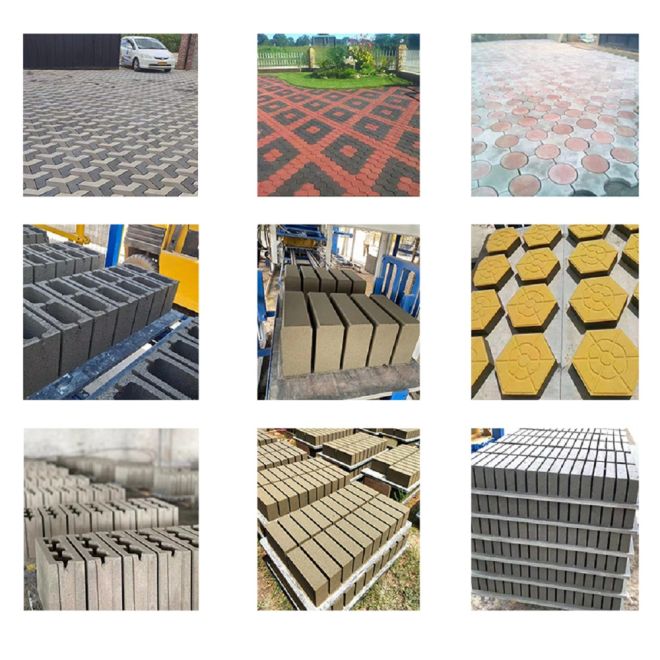
Concrete blocks are one of the most necessary and widely used building materials in construction. Known for their strength, durability, and environmental, concrete blocks are widely used from small projects to big buildings. Whether you're a project owner, construction company, or want to sell blocks in your area, we will tell you through the complete process of producing concrete blocks — from raw materials to final applications.
What Are Concrete Blocks?
Concrete blocks are pre-formed building materials made from a mixture of cement, water, and aggregates such as sand, gravel, or crushed stone. These blocks may be solid or hollow and are molded into various shapes and sizes depending on where it is used. And it is easy to use, stack, and transport, which contributes to faster construction and reduced labor costs.
Why Use Concrete Blocks?
Before diving into the production process, it’s important to understand why concrete blocks are so popular in the construction industry:
-
· Durability:Concrete blocks resist weathering and fire.
-
· Strength:They can support heavy loads, making them ideal for bearing walls.
-
· Cost-Effective:They offer a good balance between cost and selling.
-
· Environmental:It do not need to be burned, unlike the traditional burned bricks.
-
· Speed of Construction:Uniform shapes and sizes make wall construction faster and easier.
Process of Producing Concrete Blocks
Producing concrete blocks needs several steps, every of them ensures the quality and strength of the final product. Here's the details:
1. Raw Material Preparation
The basic materials required are:
-
· Cement:Just normal cement.
-
· Sands:Normally is river sands.
-
· Gravel :Gravel or crushed stone for strength.
-
· Water:Clean and free of impurities.
-
· Additives (optional):Fly ash, pigments, construction rubbish, mining waste and so on.
The choice and proportion of materials determine the block’s strength, types and your situation.
2. Mixing the Concrete
All the raw materials are measured and loaded by the batching machine and use the conveyor belt transfer into a concrete mixer. Mixing can be done manually for small production, but bigger project or construction companies operations use batching machine and twin-shaft mixer for accuracy and efficiency.
The water-cement ratio is particularly important. A low water-cement ratio improves strength, but the mix must still be workable. The raw material are well mixed and just need a vibration it can be the strong concrete.
3. Forming the Blocks
After mixing, the concrete is feeding into the moulds. This is typically done using a block making machine, which may be manual, semi-automatic, or fully automatic depending on production capacity.
-
· The machine start vibratingafter the raw materials transfer from the mixer into the up mould to remove air pockets and ensure uniform density.
-
· Molds can produce various types of blocks — from standard bricks to color pavers and curb
This step is the most important step for it determining the shape, size, and surface finish of the block.
4. Stacking and Block Transfer
After vibration the blocks are formed on pallets. At this stage, they are still fragile and must be handled carefully. The blocks are left to set for a few hours before taking out of the pallets.
5. Curing
Curing is the most critical step in the production process. Proper curing ensures that the blocks reach their intended strength .
There are different curing methods:
-
· Water Curing:Blocks are sprayed or soaked in water to maintain moisture for 7-14
-
· Steam Curing:In some area, like Mid east, the temperature is high, you can use heat and humidity.
-
· Wet Curing Room:Enclosed environments with controlled humidity and temperature.
Curing typically lasts 7 to 28 days, depending on the desired strength and curing method used.
6. Drying and Finishing
Once cured, the blocks are dried and checked. Any substandard product units can be reused. Quality control tests may include:
-
· Strength test
-
· Water absorption test
-
· Dimensionmeasuring
-
· Visual inspection for cracks or surface defects
Blocks that pass the quality checks are stacked and stored in a dry, shaded area to prevent damage.
7. Packaging and Transportation
Finally, the finished blocks are packaged by block cuber machine and prepared for shipping. They are often shrink-wrapped or strapped in stacks and loaded onto pallets for easy transportation to construction project.
Types of Concrete Blocks and Their Uses
Concrete blocks are used in many conditions, every suited for different construction needs. Here’s a look at the most common types:
1. Hollow Concrete Blocks
-
· Description:Have two or more hollow cores, reducing weight and improving insulation.
-
· Use:Ideal for partition walls and load-bearing walls in buildings.
-
· Benefits:Lightweight, cost-effective, and good thermal and sound insulation.
2. Solid Concrete Blocks
-
· Description:Solid throughout, with no cavities.
-
· Use:Used in foundations, retaining walls, and other heavy-duty applications.
-
· Benefits:Greater strength and stability.
3. Paving Blocks
-
· Description:Decorative blocks used on walking road and driveways.
-
· Use:Landscaping, sidewalks, patios, and driveways.
-
· Benefits:Shape variety, slip resistance, and durability.
4. EPS Blocks
-
· Description:EPS foam inside the blocks used for keeping the temperature.
-
· Use:In high temperature area for building like Mideast, or in low temperature like Russia.
-
· Benefits: Keep the inner temperature not too high or too low.
5. Interlocking Blocks
-
· Description:Designed to fit together in one piece with less labors working.
-
· Use:Low-cost housing, retaining walls, and quick-assembly project.
-
· Benefits:No mortar required, faster construction, and reusable.
6. Aerated Autoclaved Concrete (AAC) Blocks
-
· Description:Lightweight blocks made with a foaming.
-
· Use:High-rise buildings, green construction projects.
-
· Benefits:Light weight, fire resistance, and eco-friendly.
Environmental Considerations in Concrete Block Production
Sustainability is becoming increasingly important in the construction industry. Here’s how concrete block production is evolving to be more eco-friendly:
-
· Recycled Aggregates:Using crushed concrete or waste materials reduces the need for virgin aggregates.
-
· Fly Ash or Slag Cement:These industrial by-products can replace a portion of Portland cement, reducing CO₂ emissions.
-
· Water Recycling:Modern plants reuse water in the production process.
-
· Energy-Efficient Curing:Using solar energy or energy-efficient steam curing chambers.


