

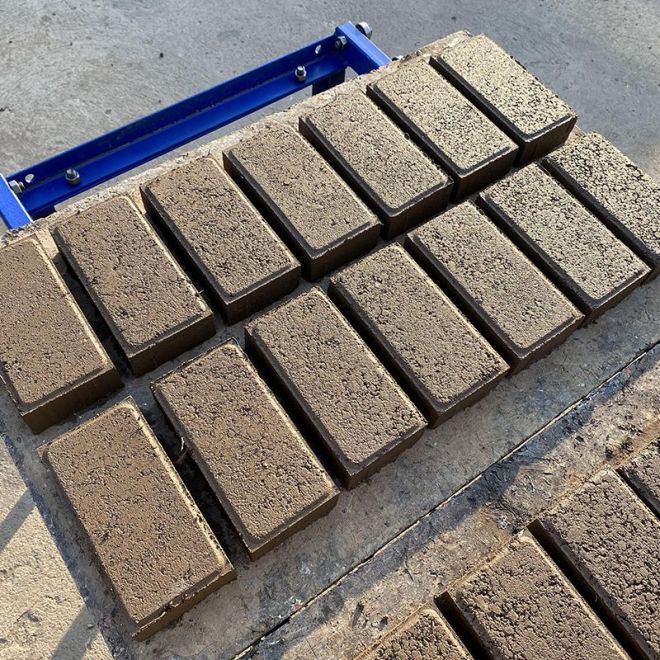
Introduction
Concrete blocks, widely used in the construction industry, serve as fundamental building units in a variety of structures. Ensuring their quality and durability is crucial for the safety and longevity of any construction project. This article delves into the critical aspects of testing concrete blocks, focusing on compressive strength, water absorption, and several other quality parameters.
Compressive Strength Assessment
● Testing Machines and Procedures
The compressive strength of a concrete block is one of its most essential properties, indicative of the block's ability to withstand loads without failure. This parameter is typically assessed using high-quality concrete block machinery, specifically designed to measure maximum load capacity. Conducting compressive strength tests involves subjecting a block to increasing pressure until it fails, thus determining its load-bearing capacity.
● Significance of Maximum Load Capacity
The maximum load capacity achieved during testing provides invaluable insights into the block's potential performance in real-world applications. Builders and architects often specify blocks with particular compressive strength to ensure structural integrity, especially in high-stress environments.
Water Absorption and Moisture Content
● Methods of Measurement
Water absorption is a critical factor affecting the durability and performance of concrete blocks. It is assessed by measuring the increase in weight after submerging a block in water. High-quality concrete block machinery can facilitate precise measurements, ensuring compliance with construction standards.
● Effects on Block Performance
Excessive water absorption can weaken a block, reducing its lifespan and compromising the structure's overall integrity. Therefore, manufacturers and builders strive to minimize water absorption to enhance the block's resistance to environmental factors.
Evaluating Dimensions and General Quality
● Importance of Precise Measurements
The dimensions of a concrete block are crucial for ensuring uniformity and stability in construction. Deviations from standard dimensions can lead to structural imbalances and aesthetic inconsistencies. Concrete block machinery manufacturers emphasize precision engineering to maintain consistent block sizes.
● Visual Quality Checks
Beyond measurements, visual inspections play an important role in quality assurance. Blocks are examined for surface defects, cracks, and color consistency, which can all impact the final appearance and integrity of the construction project.
Drying Shrinkage and Wetting Expansion
● Testing for Dimensional Stability
Concrete blocks undergo changes in dimensions due to moisture fluctuations, known as drying shrinkage and wetting expansion. Testing these parameters helps predict how blocks will behave under varying environmental conditions, ensuring that they maintain their structural integrity over time.
● Impact on Long-Term Durability
Blocks that exhibit significant shrinkage or expansion can lead to cracking and structural failure. Thus, manufacturers focus on producing blocks with minimal dimensional changes to guarantee long-term durability.
Analyzing Dry Density and Wet Density
● Procedures for Density Testing
Density tests are conducted to determine the mass of a block relative to its volume, both in dry and wet states. High-density blocks generally offer better strength and durability, making density testing a critical step in the manufacturing process.
● Correlation with Block Strength
There is a direct correlation between a block's density and its compressive strength. Higher density often translates to greater strength, which is why manufacturers invest in advanced concrete block machinery to achieve optimal density levels.
Weight Measurement Techniques
● Differentiating Between Wet and Dry Weight
Accurate weight measurements are essential for calculating loads and ensuring the structural stability of buildings. Concrete block machinery manufacturers design equipment capable of precise weight differentiation between wet and dry states.
● Role in Structural Calculations
Weight affects not only the structural calculations but also transportation and handling logistics. Consistent weight measurements help in planning construction projects more efficiently.
Conducting Water Penetration Tests
● Importance for Moisture Resistance
Water penetration tests assess a block's ability to resist water ingress, crucial for buildings exposed to weather extremes. Concrete block machinery factories produce equipment that facilitates these tests, ensuring blocks meet required standards.
● Testing Procedures on the Wet Side
Typically, blocks are tested by exposing one side to water under pressure and observing the penetration depth. This information helps manufacturers enhance their products to offer superior moisture resistance.
Capillary Suction and Drying Behavior
● Understanding Water Movement in Blocks
Capillary action is the movement of water within the porous structure of a concrete block. Testing for capillary suction helps in understanding how blocks interact with moisture and their drying behavior.
● Effects on Durability and Insulation
Excessive capillary action can compromise both the block's durability and its ability to provide insulation. Manufacturers strive to minimize porosity to enhance these properties.
Innovations in Concrete Block Testing
● Advances in Testing Equipment
Technological advances in concrete block machinery have led to more efficient and accurate testing methods. Innovations include automated testing systems and real-time data analysis, which help manufacturers maintain high standards.
● Future Trends in Concrete Block Evaluation
Future trends point towards smarter testing equipment capable of predictive analysis and enhanced quality control measures. Manufacturers are investing in research to develop more sustainable and reliable testing solutions.
Conclusion
In the competitive world of construction, the quality and durability of concrete blocks cannot be overstated. From compressive strength to water resistance, each testing parameter plays a vital role in ensuring optimal block performance. Manufacturers of concrete block machinery, particularly those offering high-quality and affordable solutions, play a crucial part in this process.
Introducing Aichen
Changsha Aichen, based in Changsha city, Hunan province of China, has been a leader in the development and manufacture of concrete block making machines since 1999. Aichen produces a diverse range of machinery, including brick machines, block forming machines, and more, utilizing the latest global technology and industry standards. Committed to sustainability, Aichen's products, such as hollow blocks and interlocking revetment blocks, are crafted from eco-friendly materials, making them ideal for applications ranging from construction to erosion control.


