
Introduction to Cement Block Machines
The construction industry has long been a cornerstone of societal development, providing the infrastructure necessary for everything from homes and roads to skyscrapers and bridges. Amidst the evolving landscape of this industry, cement block machines have emerged as indispensable tools, streamlining the construction process by offering efficient, scalable, and cost-effective solutions. The ability to produce high-quality cement blocks reliably and consistently has made these machines a crucial asset for projects worldwide. For construction businesses looking to buy a cement block machine, understanding the breadth of options available—from cheap cement block machines for small-scale operations to high-quality, high-capacity models—is essential for meeting specific project requirements and ensuring longevity and sustainability.
Types of Cement Block Machines
● Manual Block Machines for Small-Scale Production
Manual cement block machines serve as an entry point into the realm of industrial production. These machines are operated by hand, making them ideal for small businesses or individual projects where budget constraints are a primary concern. Despite their lower production capacity compared to automated systems, manual block machines excel in settings where labor costs are minimal, and the scale of production is manageable. Construction firms looking for a cheap cement block machine often consider manual options; however, it is crucial to balance cost with the benefit of hands-on control over every block produced, which can lead to higher standards of quality in smaller batches.
● Semi-Automatic Machines: Balancing Labor and Automation
For medium-sized construction projects, semi-automatic cement block machines provide a perfect compromise between manual effort and full automation. These systems integrate mechanical components with human oversight, allowing for increased production rates while still maintaining a level of manual input that can adapt to varying demands. Semi-automatic machines often feature improved efficiency over manual machines due to their ability to partially automate processes such as mixing, compressing, and molding. For businesses that require a reliable cement block machine manufacturer, semi-automatic models offer enhanced operational flexibility without the full capital investment needed for automated systems.
● Fully Automatic Machines: Maximizing Efficiency
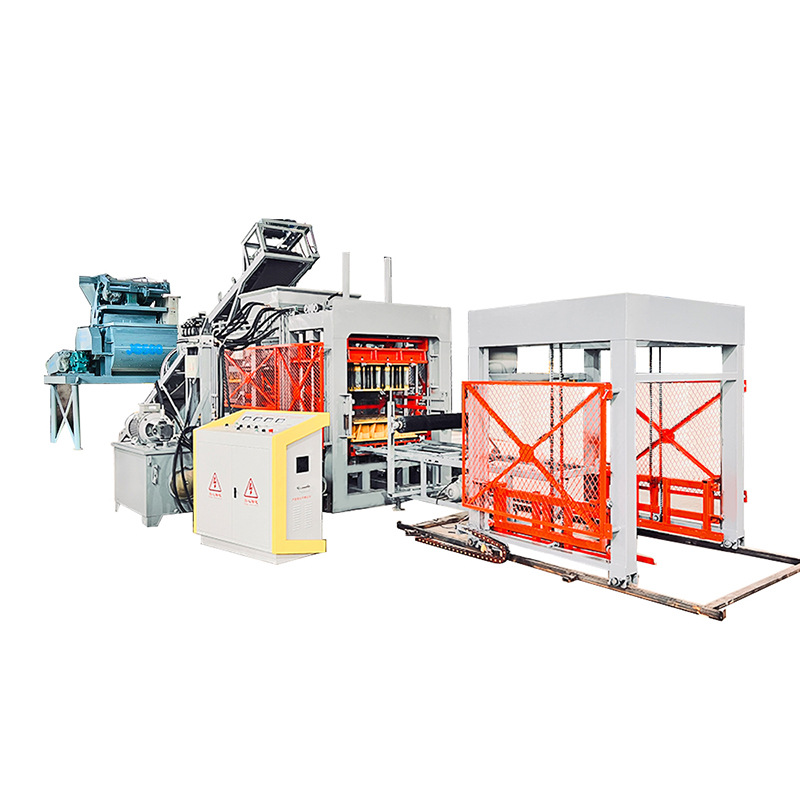
Fully automatic cement block machines represent the pinnacle of production efficiency in block manufacturing. They require minimal human intervention, relying instead on advanced technology to achieve high production rates and consistency across large volumes of blocks. These machines are particularly advantageous for large-scale construction projects or manufacturing facilities that prioritize speed and uniformity. When considering a high-quality cement block machine, companies often look to fully automatic models for their capability to produce blocks with precision, reliability, and at a competitive cost per unit, positioning themselves at the forefront of modern construction practices.
Key Features of Cement Block Machines
● Importance of Mold Systems in Block Variety
One of the defining features of any cement block machine is its mold system, which determines the diversity and type of blocks produced. High-quality machines often come with interchangeable molds, enabling manufacturers to produce various block types, such as hollow blocks, solid bricks, or interlocking pavers. The adaptability of mold systems is crucial for manufacturers aiming to meet specific market demands while maintaining a competitive edge. Investing in a machine with a versatile mold system from a reputable cement block machine factory allows businesses to expand their product offerings and cater to a broader range of construction needs.
● Role of Hydraulic and Vibration Systems
Hydraulic and vibration systems play a significant role in the quality and structural integrity of the blocks produced by cement block machines. Hydraulic systems apply uniform pressure during the block formation process, ensuring dense and durable masonry units. Meanwhile, vibrations eliminate air pockets by evenly distributing the cement mix, which enhances block strength and longevity. For manufacturers seeking to deliver consistent quality, machines equipped with advanced hydraulic and vibration technology are indispensable tools in producing high-strength blocks that meet industry standards and withstand the test of time.
Benefits of Using Cement Block Machines
Cement block machines offer numerous advantages that align with the evolving demands of the construction industry. From a cost-effective perspective, they significantly reduce the reliance on manual labor, cutting down on associated costs while boosting production capacity. The efficiency of these machines allows construction businesses to scale operations, meeting tight deadlines and increasing profitability. Moreover, the precision and consistency afforded by automated systems—especially those from established cement block machine manufacturers—ensure that blocks meet stringent quality control measures, resulting in uniform products that enhance construction integrity and safety.
Applications in Construction Projects
The versatility of cement block machines enables their application across a vast array of construction projects. Cement blocks are fundamental components in building foundations and walls, providing structural support and stability. Moreover, their utility extends beyond traditional applications to include infrastructure development such as roads, retaining walls, and even specialized projects like community centers or recreational facilities. By investing in a high-quality cement block machine, construction firms can augment their capability to deliver durable and reliable structures that stand up to environmental challenges and changing architectural trends.
Innovations in Cement Block Machine Technology
Recent advancements in technology have significantly influenced the evolution of cement block machines, incorporating features such as computer control systems for enhanced precision and efficiency. Innovations like automated material feeding, real-time monitoring, and adaptive control algorithms have transformed how blocks are produced, allowing manufacturers to fine-tune production parameters in response to real-time data. These developments not only improve the quality and consistency of the blocks but also optimize operational efficiency, reduce waste, and increase the sustainability of manufacturing processes. When choosing to buy a cement block machine, companies prioritize these technological features to maintain competitiveness and innovate within the construction sector.
Conclusion and Future Trends
In summary, cement block machines represent a vital investment for construction companies seeking to enhance productivity, efficiency, and quality. Whether choosing a manual, semi-automatic, or fully automatic model, understanding the capabilities and benefits of each type is crucial for aligning production with specific project requirements. As technology continues to advance, the demand for innovative and high-quality machines will only increase, driving manufacturers to push the boundaries of what is possible in block production. The future of the industry lies in adopting cutting-edge technology and sustainable practices, ensuring that cement block machines remain an integral part of construction development worldwide.
● Introducing Aichen
Changsha Aichen, located in Changsha city, Hunan province, China, has been a pioneer in the research, development, manufacture, and sales of concrete block making machines since 1999. Aichen offers a broad array of concrete-product machines and block production lines, including brick machines, automatic and semi-automatic block machines, and multifunctional models. Their equipment is engineered using state-of-the-art global technology and adheres to rigorous quality management standards, producing diverse concrete masonry products such as hollow blocks and interlocking revetment blocks for various construction sectors.